Examine any document like a court-certified expert
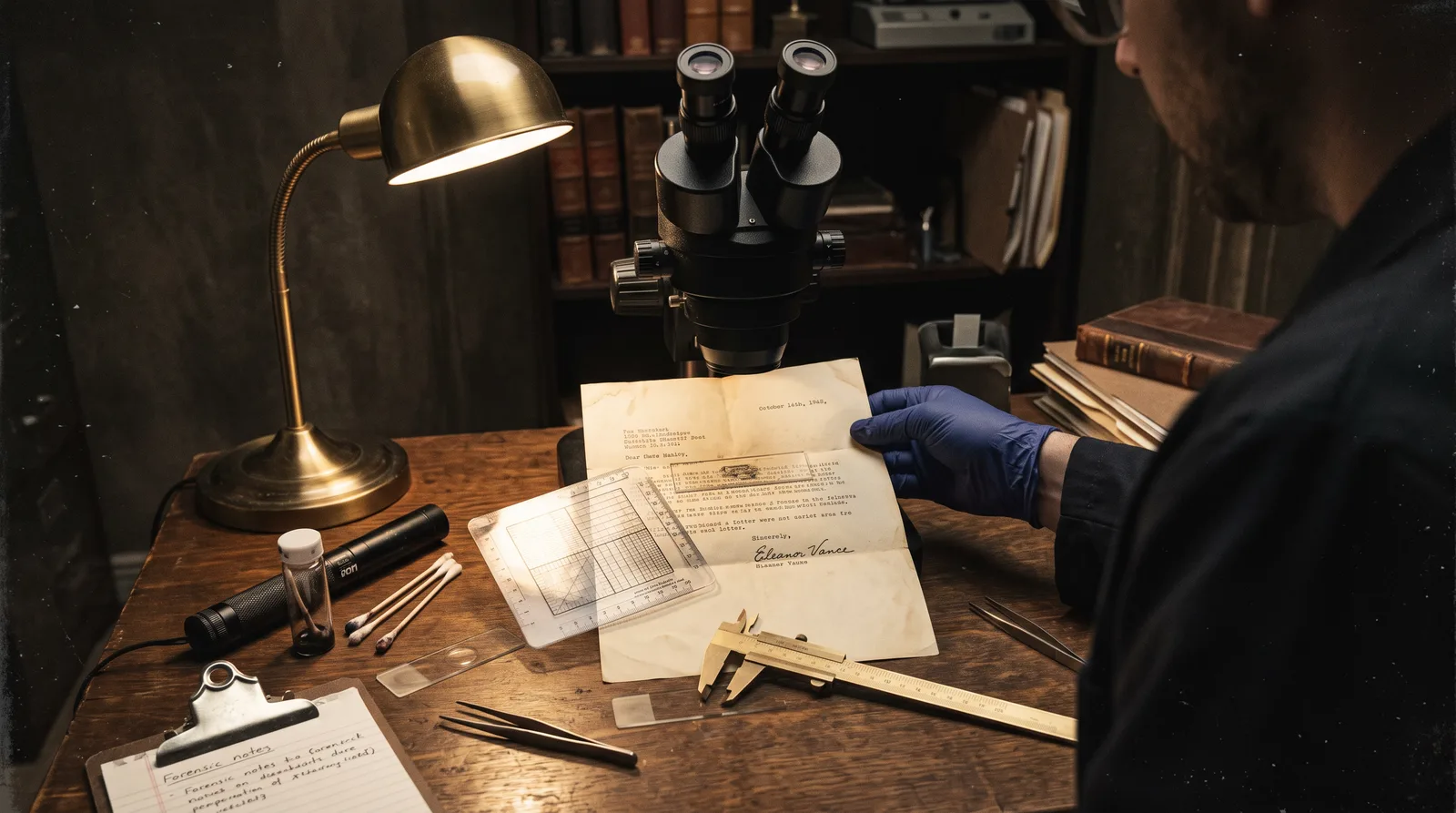
Forensic Document Lab gives you the standardized protocols, scientific methodology, and expert witness skills used by practicing QDE examiners — so you can detect fraud, authenticate evidence, and testify with authority in any legal setting.
"Every shortcut you take in the lab becomes a vulnerability on the stand — this school teaches you to leave no shortcuts."
— PROF. PETER OLU. OLAYIWOLA, Ph.D.
What you'll learn
What you'll be able to do
- Examine questioned documents using standardized forensic protocols to detect alterations, erasures, and forgeries.
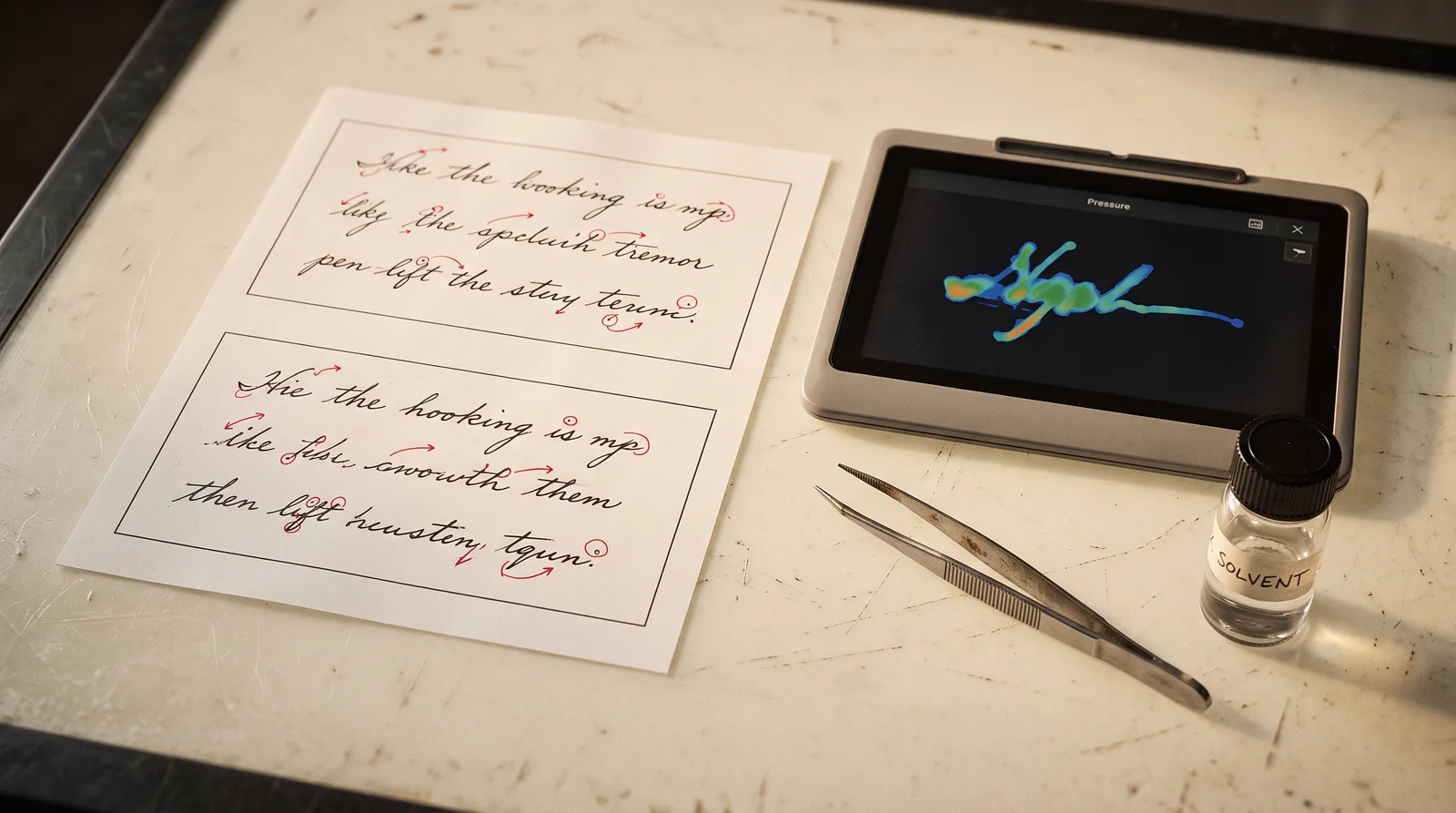
- Apply handwriting analysis principles to compare exemplars and produce defensible identification or elimination opinions.
- Authenticate or challenge signatures using biomechanical and morphological criteria accepted in court.
- Operate and interpret results from biometric tools including fingerprint, iris, and digital signature verification systems.
- Reconstruct the sequence of events in a document — ink dating, paper analysis, and obliteration recovery — using physical and chemical methods.
- Prepare a court-ready Questioned Document Examination report and deliver credible expert witness testimony under cross-examination.
How it works
A school that adapts to you
This isn't a set of static videos. Every lesson is generated live and tuned to where you actually are.
We learn your level
A quick placement check tailors your starting point so you're never bored or lost.
Lessons adapt as you go
Each lesson is written for your pace and your goal, adjusting as your skills grow.
Your AI coach keeps you moving
Checkpoints, feedback, and gentle nudges turn progress into a real result.
The curriculum
What's inside your school
6 modules · 29 lessons
Foundations of Questioned Document Examination
Establishes the scientific, legal, and methodological framework every examiner must master before touching a case file.
- 1.1The Discipline of Forensic Document ExaminationIncluded
- 1.2Legal Standards and AdmissibilityIncluded
- 1.3Laboratory Safety, Chain of Custody, and Evidence HandlingIncluded
- 1.4Instrumentation and Imaging TechnologiesIncluded
- 1.5Collecting and Evaluating Exemplar StandardsIncluded
Document Authentication — Alterations, Erasures, and Forgery Detection
Trains students to detect physical and chemical tampering through standardized forensic examination protocols.
- 2.1Paper and Substrate AnalysisIncluded
- 2.2Detecting Alterations and AdditionsIncluded
- 2.3Erasure Recovery — Mechanical and ChemicalIncluded
- 2.4Indented Writing Recovery with ESDAIncluded
- 2.5Sequence of Strokes and EntriesIncluded
Ink, Printing, and Dating Analysis
Covers physical and chemical methods for characterizing writing media and establishing when a document was produced.
- 3.1Ink Chemistry and ClassificationIncluded
- 3.2Ink Dating MethodsIncluded
- 3.3Printer and Photocopy ExaminationIncluded
- 3.4Typewriter and Rubber-Stamp AnalysisIncluded
Handwriting Analysis and Comparison
Builds the examiner's ability to apply morphological and biomechanical principles to produce defensible identification or elimination opinions.
- 4.1Principles of Handwriting IndividualityIncluded
- 4.2Identifying Class and Individual CharacteristicsIncluded
- 4.3Biomechanical Analysis of WritingIncluded
- 4.4Disguised and Forged HandwritingIncluded
- 4.5Forming and Expressing the OpinionIncluded
Signature Verification and Biometric Forensics
Integrates morphological signature examination with modern biometric technologies to authenticate or challenge identity claims.
- 5.1Anatomy of a Genuine SignatureIncluded
- 5.2Signature Forgery Types and DetectionIncluded
- 5.3Digital Signature and E-Document AuthenticationIncluded
- 5.4Fingerprint Biometrics in Document CasesIncluded
- 5.5Iris, Facial, and Behavioral Biometric SystemsIncluded
Casework, Reporting, and Expert Witness Testimony
Synthesizes all prior skills into complete case analysis, court-ready report writing, and credible testimony under cross-examination.
- 6.1Structuring the Forensic Case FileIncluded
- 6.2Writing the Court-Ready QDE ReportIncluded
- 6.3Visual Aids and Demonstrative EvidenceIncluded
- 6.4Direct Examination and Cross-Examination TechniquesIncluded
- 6.5Integrated Capstone Case AnalysisIncluded
Who it's for
Is this you?

Forensic science students
Building a rigorous, court-admissible QDE skill set before entering the field — from ink chemistry to expert witness testimony.
Law enforcement investigators
Developing in-house document examination capability to strengthen fraud and forgery cases from evidence intake through prosecution.
Legal practitioners
Gaining the technical literacy to challenge or sponsor document evidence and work more effectively with forensic expert witnesses.

Fraud examiners
Adding scientifically defensible document authentication techniques to financial fraud investigations and case reporting.

Private investigators
Acquiring the forensic methodology to examine questioned documents professionally and deliver findings that hold up in civil or criminal proceedings.

Aspiring expert witnesses
Preparing to qualify and testify as a QDE expert — learning to structure reports, prepare demonstrative exhibits, and withstand cross-examination.
Questions
Frequently asked
Your teacher
A note from your teacher
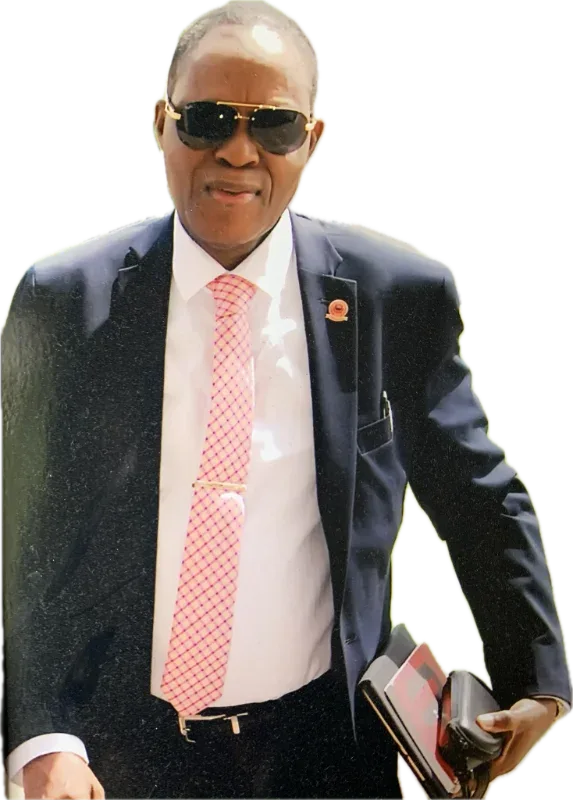
PROF. PETER OLU. OLAYIWOLA, Ph.D.
If you are reading this, you already understand that document fraud is not an abstract concern. It shows up in forged wills, backdated contracts, fabricated evidence, and fraudulent identities — and the people asked to examine those documents are expected to be unimpeachable in both their science and their testimony. I built Forensic Document Lab because the gap between what most practitioners know and what the courtroom actually demands is wider than it should be.
I have spent my career working questioned document cases — examining handwriting, dating inks, recovering obliterated entries, authenticating signatures, and sitting in the witness chair while opposing counsel did their best to find a crack in my methodology. What I learned is that confidence in court comes entirely from rigor in the lab. Every shortcut you take during examination becomes a vulnerability under cross-examination. This school is structured around that reality.
Every section of the curriculum reflects how a working examiner actually approaches a case: you start with evidence integrity and instrumentation, work through the physical and chemical examination of the document itself, move into handwriting and signature analysis with biomechanical precision, and then extend into the biometric and digital contexts that modern casework increasingly demands. Nothing is taught in isolation — each technique is positioned within the chain of custody and the evidentiary standard it must ultimately satisfy.
The part of this work that most training programs underserve is the reporting and testimony side, and that is where I have been especially deliberate. Knowing how to detect a forgery is necessary. Being able to explain that detection to a judge and jury — in writing and on the stand, under adversarial pressure — is what makes you effective. The final section of this school gives that the full attention it deserves, including a capstone case that puts every skill to work in an integrated, realistic investigation.
If you are a forensic science student, a law enforcement professional, a fraud examiner, a private investigator, or a legal practitioner who works with questioned documents, this school will raise the standard of your work and your credibility in any legal forum. I hold every lesson to the evidentiary standard the courtroom demands. I invite you to hold yourself to the same one.
— PROF. PETER OLU. OLAYIWOLA, Ph.D.
Start your journey today
Get instant access — learn at your own pace with an AI coach in your corner.
$97/mo
Recurring billing · cancel anytime
Secure checkout · Instant access
- 6 modules, 29 lessons
- AI-adaptive lessons tuned to your level
- Quizzes & checkpoints to lock in progress
- Your own AI learning coach
- Learn on any device, at your pace
- Full access for as long as you're subscribed